
If you’re reading this, chances are high you had an ACL reconstruction or you’re going to have one. I’m sure you’re excited to return to your day-to-day life and sports.
This will probably be one of the hardest things you ever do.
Speaking as someone who had an ACL reconstruction surgery recently, and has been through the whole process, let me walk you through a rough overview on what to expect with physical therapy. I’ll highlight specific criteria I use to progress with patients. With my own rehabilitation, I can’t tell you the number of times I’ve felt better just to attempt the next clearance test and get a reality check.
That said, this is a rough overview and each patient is different! If you want to learn more, you can check out the rest of the blog and learn more about our clinic. If you need further help, book an appointment to see us!
Ready? Let’s get started!
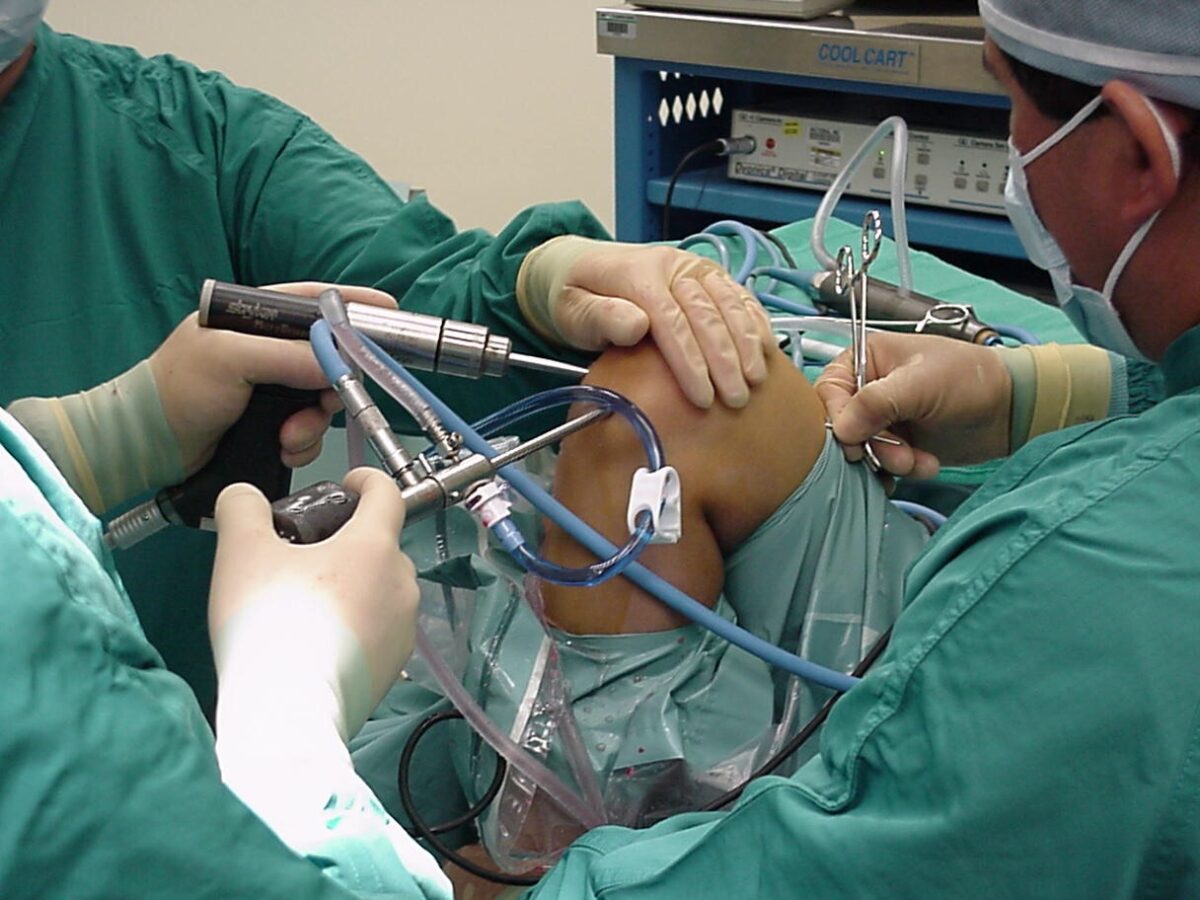
Each phase of physiotherapy includes specific milestones, clinical tests, and clearance criteria to ensure your knee is ready for the next stage. Recovery timelines vary between individuals, but most patients return to full performance between 12 and 16 months after surgery.
Progression is based on objective testing and professional assessment rather than just time or symptoms alone.
Goals: Reduce pain and swelling, restore full knee extension, activate the quadriceps, and begin gentle range of motion exercises.
What to Expect: Crutches are typically required during this phase. Weight-bearing is usually allowed as tolerated, depending on surgical instructions. Physiotherapy focuses on ensuring safety, improving range and weightbearing and walking.
Clearance Criteria: Controlled pain and swelling, full knee extension, safe weight-bearing with crutches, and demonstrated quadriceps activation during clinical testing.
Goals: Achieve near full range of motion, normalize walking pattern, improve muscle strength, and enhance balance and stability.
What to Expect: This is one of THE MOST IMPORTANT phases of your rehabilitation. It’s very important to restore your range early on, otherwise it is quite difficult to regain it.
We transition from crutches to a cane once a normal walking pattern is achieved, while continuing to focus on having functional range and weightbearing.
Clearance Criteria: Full or near full knee range of motion, normal gait without assistive devices, minimal swelling, and appropriate muscle control during functional testing.
Goals: Restore full, pain-free range of motion, improve functional strength and endurance, and advance neuromuscular control.
What to Expect: The The purpose is to be able to do day-to-day things like longer walks, stairs, etc. normally.
Exercises become more dynamic and include step-ups, lunges, and progressive strengthening. Cardiovascular conditioning is introduced with low-impact activities.
Clinical Tests and Milestones: Improvement in Lower Extremity Functional Scale (LEFS) scores, functional squat and step-down assessments, and balance testing on stable and unstable surfaces.
Clearance Criteria: Full range of motion without pain, absence of swelling after activity, strong muscle control during functional testing, and appropriate functional outcome scores.
Goals: Increase strength, endurance, and coordination while being able to do more difficult tasks, and preparing for jumping and running.
What to Expect: Dynamic exercises such as single-leg strengthening. We introduce some light jumping, and progress strengthening exercises. The graft is not 100% at this stage and it is VERY IMPORTANT that you follow instructions from your physiotherapist and continue your rehabilitation.
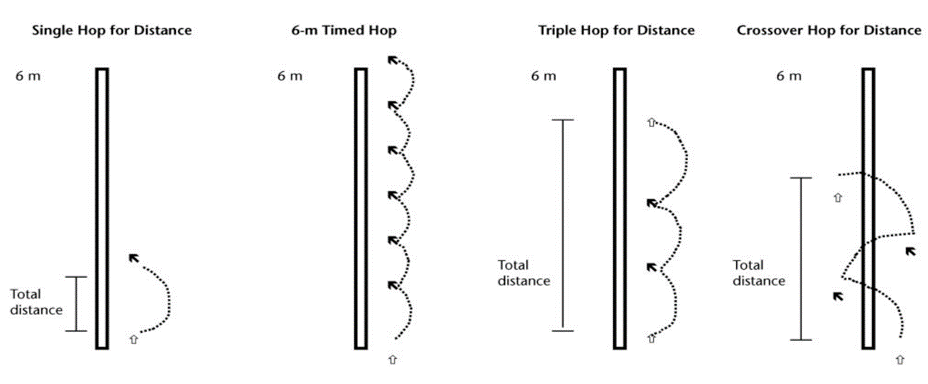
Clinical Tests and Milestones: Single-leg squat assessment, hop test progression, and evaluation of strength symmetry between limbs.
Clearance Criteria: Symmetrical movement patterns, no pain or swelling during advanced exercises, and strength approaching that of the uninjured limb.
Goals: Restore power, agility, and sport-specific endurance while improving dynamic knee stability.
What to Expect: Light and modified running, sport-specific drills and higher-level agility exercises are introduced gradually. Goal is to build enough strength and control in the knee to be able to withstand the ‘chaos’ of sports.
Clinical Tests and Milestones: Single-leg hop tests for distance and time, crossover hop testing, and agility assessments.
Clearance Criteria: No pain or swelling during or after training, appropriate strength and endurance for sport demands, and satisfactory performance on functional tests.
Goals: Achieve maximal strength, power, and confidence while safely returning to sport participation.
What to Expect: Return to sport occurs gradually. and is guided by objective testing. Patients typically progress from drills, light practice, non-contact drills to full participation once cleared.
Clinical Tests and Milestones: Advanced hop testing, agility drills, and strength assessments using functional or dynamometric testing.
Clearance Criteria: Strength symmetry of 100–105 percent compared to the uninjured leg, successful completion of hop and agility tests, absence of pain or instability, and clearance from both the physiotherapist and surgeon.
Timeline: Most patients achieve full recovery between 12 and 16 months following ACL reconstruction. This timeline allows for optimal graft healing, restoration of strength, and safe return to full performance.
ACL reconstruction and physiotherapy is a comprehensive and individualized process. It requires commitment, structured physiotherapy, and professional guidance.
Each phase builds on the previous one to ensure safe progression toward full activity. By meeting specific clinical milestones and clearance criteria, patients can confidently return to sport and daily activities with optimal knee function and reduced risk of reinjury.
Arjun Patel, PT, MScPT, MCPA is an orthopedic, neuro, and vestibular physiotherapist. He is the director of Blue Space Clinic Physiotherapy and sees complex cases on a daily basis. He is also an adjunct lecturer at the faculty of medicine at University of Toronto.
To learn more about Arjun and our clinic, click here!